-
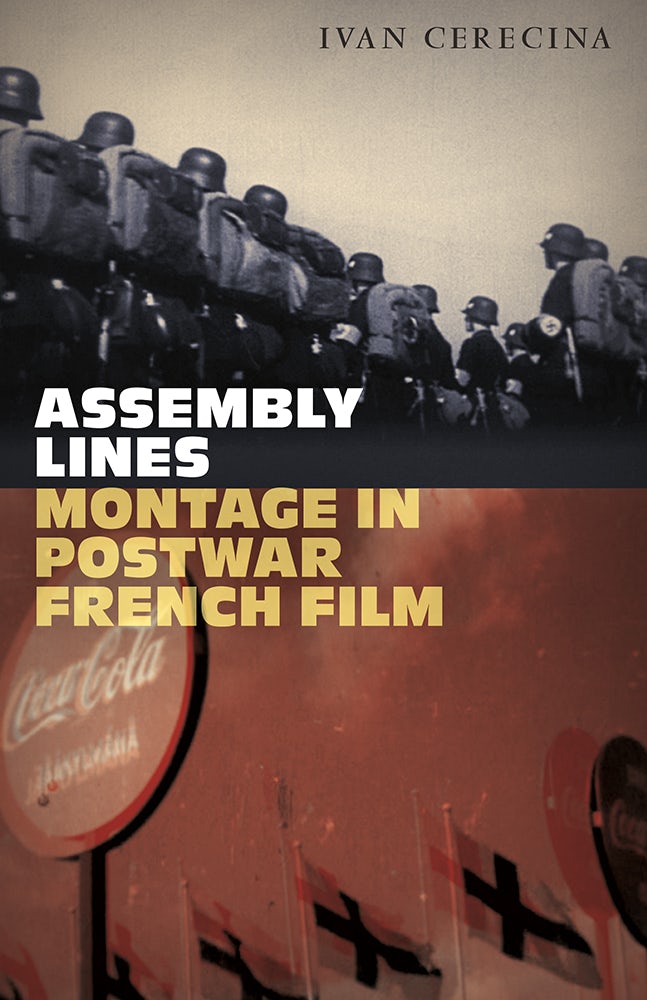
Assembly Lines: Montage in Postwar French Film (University of Minnesota Press, 2026)
Montage and historical thought in postwar French cinema
Assembly Lines examines the renewed importance of montage in French cinema after the Second World War through the early films of Nicole Vedrès, Alain Resnais, and Chris Marker. Against familiar accounts of the period centred on realism and the emergence of the New Wave, the book offers another history of postwar film: one in which montage offered a way to confront the recent past, interpret the present, and imagine uncertain futures.
Bringing film analysis into dialogue with French cultural history, Assembly Lines traces the connections among filmmakers, critics, artists, and institutions that shaped this history. It considers how montage was used to rework images of war, colonialism, the concentration camps, and the atomic bomb, while drawing attention to neglected figures and writings by André Malraux, Jacques Brunius, and Henri Langlois.
Archival research, including correspondence and production materials relating to Védrès’s Paris 1900 and Resnais’s Night and Fog, reveals how these films developed through broader debates about cinema, history, and cultural memory. In doing so, Assembly Lines presents montage not simply as a method of editing, but as a way of thinking historically through images.
Praise for Assembly Lines
“Assembly Lines provides a generative theorization of montage in postwar France, exploring how the technique became a key method for reflecting on the past, agitating the present, and deciphering the future. Beautifully written and lucidly argued, this book is an absolute pleasure to think alongside and a valuable contribution to the field.” —James Leo Cahill, author of Zoological Surrealism: The Nonhuman Cinema of Jean Painlevé
“Postwar French documentary has long been recognized as a high point in film history. Focusing on the work of Nicole Védrès, Alain Resnais, and Chris Marker, Ivan Cerecina draws fresh and compelling connections between documentary film, art, and politics. The compilation film, he reveals, constitutes a powerful historiography, one that shaped our thinking about the Cold War, colonialism, and World War II.” —Kelley Conway, University of Wisconsin–Madison
Now available via Minnesota University Press.